
While UNO appears to be a simple card game on the surface, experienced players know that strategic thinking can dramatically improve your win rate. If you've mastered the basic rules and want to take your game to the next level, these advanced strategies will help you outsmart your opponents and claim more victories.
Want a quick practice run? Start with Classic UNO or jump into UNO Online Multiplayer to sharpen these tactics against real opponents.
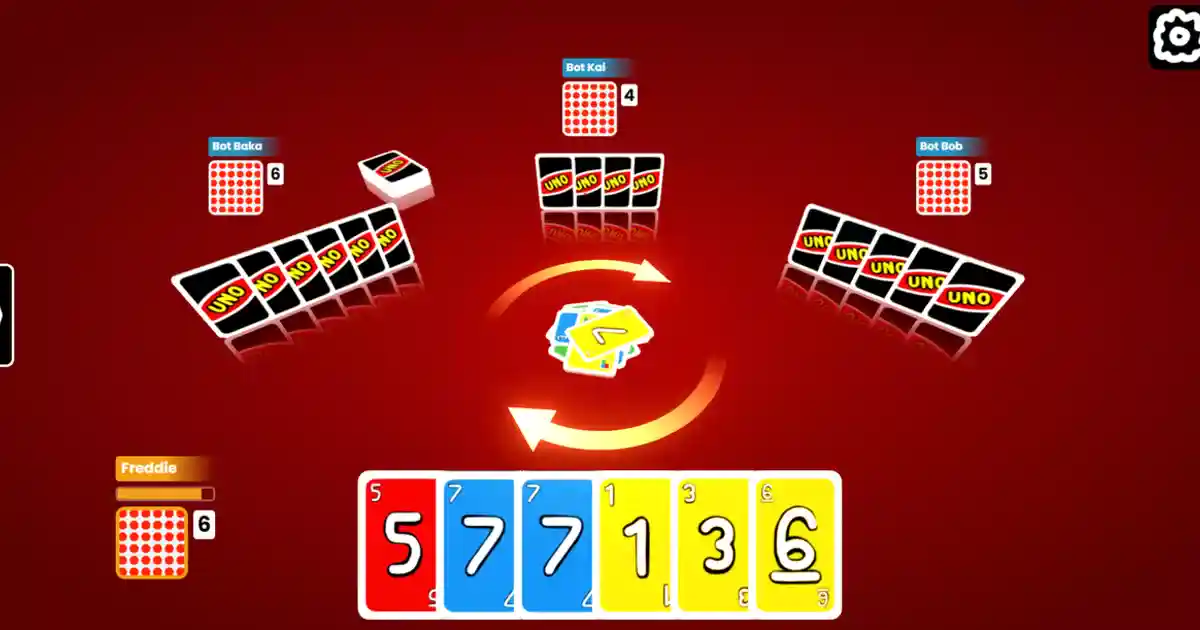
1. Card Counting and Probability Management
Serious UNO players understand basic probability. A standard UNO deck has specific distributions of cards, and tracking what's been played can give you a significant advantage.
What to Track
Keep mental notes of which action cards have been played, especially Wild Draw Four cards. There are only four in the entire deck, so if you've seen three played, you know there's only one remaining. This information helps you make better decisions about when to challenge a Wild Draw Four.
Similarly, track color distribution. If you notice that many red cards have been played, the likelihood of opponents having red cards decreases. This can inform your color choices when playing Wild cards.
Probability in Action
When you're forced to draw a card, understanding probability helps manage expectations. With 108 cards total and roughly equal distribution among colors, you have approximately a 25% chance of drawing any specific color. However, this changes as the game progresses and certain colors become depleted.
2. Strategic Wild Card Management
Wild cards are the most powerful tools in your hand, but many players waste them early in the game. Here's how to maximize their value:
When to Play Wild Cards
- Save for Crisis Moments: Hold your Wild cards until you're genuinely stuck. If you have other playable cards, use those first even if a Wild card seems more convenient.
- Color Control: Use Wild cards to switch to colors your opponents appear to lack. If you notice an opponent drawing multiple times on blue, switching to blue puts pressure on them.
- Offensive Timing: Play Wild Draw Four cards when opponents have few cards remaining. Drawing four cards when someone has only two or three cards can devastate their position.
The Wild Card Bluff
Sometimes, playing a Wild card when you have other options can be strategically sound. It keeps opponents guessing about your hand composition and can disguise which colors you're collecting.
3. Reading Your Opponents
UNO isn't played in isolation. Observing opponent behavior provides crucial information:
Hand Size Analysis
Players with many cards likely lack versatile options. Target them with color changes to force more draws. Conversely, players with few cards are dangerous and should be blocked with action cards when they're about to win.
Pattern Recognition
Notice which colors opponents tend to play freely versus which they seem to avoid. If someone consistently hesitates before playing green but readily plays red, they probably have more red cards.
UNO Call Timing
When an opponent reaches two cards, pay close attention to whether they called UNO. If they forgot, you can catch them for a penalty. However, don't get so focused on this that you neglect your own strategy.
4. Action Card Timing and Sequencing
Action cards are game-changers when used correctly:
Skip and Reverse Positioning
In multiplayer games, Reverse cards can be more valuable than Skip cards. A well-timed Reverse can give you another turn quickly if the player to your right just played. Skip cards are most effective when used on opponents who are close to winning.
Draw Two Chain Strategy
If your game allows stacking (a common house rule), save Draw Two cards to counter others. Even if stacking isn't allowed, hold Draw Two cards to play on opponents when they're about to call UNO.
Defensive Action Cards
Don't always play action cards offensively. Sometimes holding a Skip or Reverse can protect you. For example, if the player before you tends to play Draw Two cards frequently, having a Skip to play on the next turn can protect you.
5. Color Monopoly Strategy
One powerful approach is building a color monopoly:
Building Your Monopoly
Early in the game, try to collect multiple cards of one or two colors. When you gain control through a Wild card, switch to your monopoly color. Opponents will struggle to match while you can play multiple turns.
Breaking Opponent Monopolies
Conversely, when you notice an opponent building a color monopoly (they keep playing the same color repeatedly), use your Wild cards to break their streak by switching colors.
6. The Two-Card Endgame
Managing the final two cards requires special consideration:
Optimal Card Pairing
Ideally, your last two cards should be:
- One Wild card and one number card in a common color
- Two number cards of different colors but the same number
- An action card plus a Wild card
Avoid ending with two cards of the same color and different numbers, as this limits your options.
Forced Draw Strategy
When you're down to two cards, sometimes drawing an additional card is strategically better than playing one of your final cards, especially if both are in colors not currently in play.
7. Challenging Wild Draw Four Cards
The challenge rule is underutilized but can shift momentum:
When to Challenge
- The player had just played several cards of the current color
- You're losing anyway and have little to lose
- You're tracking cards and know they likely had a legal play
When Not to Challenge
- You have few cards (losing the challenge hurts more)
- The player drew cards recently (suggesting they lacked that color)
- You're winning and don't want to risk your position
Psychological Challenges
Occasionally challenge even when you're uncertain. This makes opponents think twice about playing Wild Draw Four cards illegally, improving your overall position across multiple games.
8. Table Position Awareness
Your position relative to other players matters:
Pre-Turn Planning
Always plan your move before your turn arrives. Know which card you'll play if the color doesn't change, and have backup plans for each possible color.
Player Order Strategy
In a four-player game, the player directly across from you is your natural ally in limiting the players immediately before and after you. Coordinate your actions indirectly by observing their struggles and exploiting the same colors.
End-Position Play
Being last in the turn order before it cycles back requires different strategy than going first. Last position lets you see what others play before making your move, providing more information.
9. Memory and Information Retention
While not card counting in the strictest sense, remembering key information gives you an edge:
Track Wild Plays
Remember which colors players chose when playing Wild cards. This reveals their hand composition. If someone changes to green three times in a row, they probably have multiple green cards.
Remember Draws
Note when opponents draw multiple cards. They likely lack the current color and adjacent colors in the spectrum.
Action Card History
Remember who has used their powerful action cards. A player who's played both their Draw Two blue cards probably has no more, making blue a safer color choice.
10. Adaptive Strategy Based on Game State
The best strategy changes as the game progresses:
Early Game (7-10 cards)
Focus on hand diversity and information gathering. Play conservatively, building your understanding of opponents' hands. Save powerful cards for later.
Mid Game (4-6 cards)
This is the transition phase. Start becoming more aggressive with action cards. Begin building toward your endgame hand composition.
Late Game (1-3 cards)
Maximum aggression. Use all tools available to prevent opponents from winning while securing your own victory. This is when Wild cards and Draw cards have maximum impact.
Losing Position Recovery
If you're far behind with many cards, focus on disruption. Use Draw cards and color changes to slow leaders while you build back up. Sometimes helping the second-place player block the leader is your best path back into contention.
Combining Strategies
The most effective players don't rely on one strategy but combine multiple approaches:
Start by tracking cards and probabilities throughout the game. Use this information to read opponents better. Apply position awareness to time your action cards perfectly. Manage your Wild cards carefully based on the game state. Finally, adapt your approach as the game evolves.
Practice and Pattern Development
Like any skill-based game, consistent practice develops intuition:
Online Practice Benefits
Playing UNO online provides excellent practice because:
- Games move quickly, giving you more repetitions
- You face diverse opponents with different strategies
- The computer enforces rules consistently, helping you internalize them
- You can focus entirely on strategy without managing physical cards
If you want more tactical practice beyond UNO, explore the broader strategy games collection.
Analyzing Your Games
After each game, especially losses, think about critical decision points. Could you have played that Wild card later? Should you have challenged that Wild Draw Four? This reflection builds better instincts.
Conclusion
While UNO contains elements of luck through card draws, skilled players win consistently by applying strategic thinking. Card counting, probability management, opponent reading, timing, and adaptability all contribute to success.
The strategies outlined here represent advanced play concepts, but they're all learnable with practice. Start by implementing one or two strategies, then gradually incorporate others as they become natural. Over time, these approaches will become intuitive, and you'll find yourself making better decisions automatically.
Remember that UNO is ultimately about enjoyment. While winning is satisfying, the real value comes from engaging experiences with friends and fellow players. These strategies enhance that experience by making games more competitive and intellectually stimulating, whether you're playing casually at home or competing online.
Now that you understand these advanced concepts, put them into practice. Each game is an opportunity to refine your skills, test new approaches, and become a more formidable UNO player.