


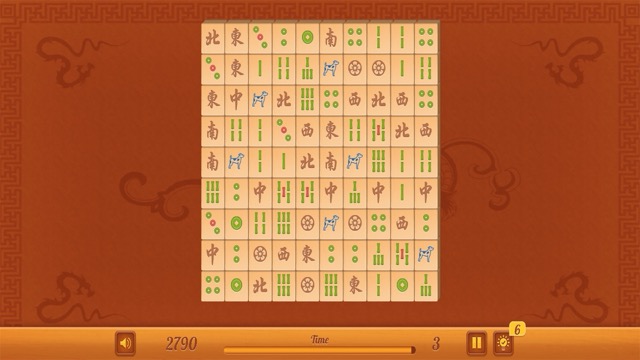







1. Heritage Mahjong Classic Game Overview
Heritage Mahjong Classic is a timeless, elegantly distilled version of mahjong tile matching built around one beautifully focused goal: clear the board as fast as possible. With a single unified layout, three distinct tile skin options, and a scoring system that specifically rewards speed, it delivers a competitive mahjong experience that's serene in presentation but quietly demanding in execution.
The premise is immediately accessible — identify exposed matching tile pairs and remove them until the board is empty. But Heritage Mahjong Classic layers genuine strategic depth beneath that simple surface. Not all exposed tiles are equal: some tiles, when removed, unlock cascading access to new pairs; others are dead ends that clear two tiles but open nothing useful. Reading the board's accessibility landscape — finding the pairs that create the most downstream movement — is what separates fast clearances from slow ones.
The time-based bonus reward system is the game's primary competitive hook. Points are earned for each pair removed, but the faster you clear them, the more time bonuses accumulate. Players who identify pairs rapidly and clear boards efficiently earn dramatically higher scores than those who take a methodical, unhurried approach. This time sensitivity keeps even familiar board layouts feeling competitive rather than routine.
The best-of leaderboard adds a social competitive dimension: your fastest clears are recorded and ranked, giving you a concrete benchmark to chase across sessions. Three tile skin types let you personalize the visual experience without affecting mechanics — a small but appreciated player choice.
Key Details:
| Genre: | Puzzle / Mahjong / Tile Matching |
| Difficulty Level: | Easy to Medium |
| Average Play Time: | 5–15 minutes per board |
| Best For: | Mahjong fans who enjoy clean, fast-paced tile matching with speed-based scoring and leaderboard competition |
2. How to Play Heritage Mahjong Classic
Getting Started:
- The unified board layout is presented at the start of each game with all tiles visible.
- Identify any two tiles that display the same image and are both "exposed" (free on at least one side).
- Click both matching exposed tiles to remove them from the board.
- Continue matching and removing pairs, working to expose buried tiles beneath.
- Clear all tiles from the board to win — the faster you clear, the higher your score.
Basic Controls:
- Mouse Click: Click the first of a matching exposed pair to select it, then click the second to remove both.
- Hint Button: Request a hint to highlight a valid matching pair when no pair is immediately visible.
Objective: Remove all tile pairs from the board as quickly as possible. Speed is rewarded with time bonuses that multiply your score — the fastest complete clearances earn the highest positions on the best-of leaderboard.
3. Heritage Mahjong Classic Features & Highlights
- ✓ Time-based bonus scoring — faster clearances earn significantly higher scores, rewarding efficient tile recognition and removal
- ✓ Best-of leaderboard — personal best tracking with competitive ranking for speed and accuracy benchmarking
- ✓ Three tile skin types — visual personalization options without any mechanical impact
- ✓ Hint system — a suggestion facility for moments when no pair is immediately visible
- ✓ Single unified layout — consistent board design for clean, focused play without layout variation complexity
4. Heritage Mahjong Classic Tips & Strategies
Beginner Tips:
- Check accessibility before clicking. A tile is only removable if it has at least one free lateral edge and nothing stacked on top of it. Clicking a blocked tile wastes time — visually confirm accessibility before committing to a selection.
- Remove pairs that uncover other tiles first. Two matching tiles buried under others are worth more than two matching edge tiles because removing them cascades access to new pairs beneath. Prioritize the removes that expand your options.
- Scan the full board before starting, not just locally. Your first few removes set the efficiency tone for the entire clearance. A brief full-board scan at the start identifies the highest-impact opening pairs before you begin accumulating time bonuses.
Advanced Strategies:
- Develop a scanning pattern. Rather than random visual searching, scan the board in a consistent spatial pattern (left-to-right, top layer first) so your eyes cover all accessible tiles systematically without missing potential matches or revisiting already-scanned sections.
- Identify and prioritize your scarcest tile types. Some tile images appear only twice in the layout — once each. These pairs must be matched together and cannot be deferred indefinitely. Locate rare pair types early and ensure you're not inadvertently blocking one while clearing around the other.
- Use the hint button as a timer reset, not a crutch. The hint button should be used the moment you've genuinely scanned the board and found nothing — not after a brief two-second look. Holding out past your natural recognition threshold wastes time bonus potential that a fast hint click would preserve.
What to Watch Out For:
- Blocking rare tiles. Clearing tiles adjacent to a rare tile type without matching that tile first can strand it — leaving one half of a needed pair inaccessible while the other sits exposed and unclearable. Track rare tile locations throughout the game.
- Speed over accuracy errors. The time bonus incentivizes speed, but clicking a non-matching pair or a blocked tile wastes more time than a careful extra second of confirmation would have. Maintain sufficient recognition accuracy to avoid correction overhead.
5. Heritage Mahjong Classic Game Elements Explained
The Tile Accessibility System: Heritage Mahjong Classic uses standard mahjong tile accessibility rules: a tile is removable only when it has at least one free lateral edge (no tile immediately blocking it to the left or right) and no tile sitting on top of it. Tiles fully surrounded by other tiles — blocked on both sides and covered above — are completely inaccessible until the tiles around them are removed. This accessibility constraint is what gives the game its strategic depth: not all pairs can be matched when they appear matching, and the order in which you remove pairs determines which new tiles become accessible next. The best clearances involve chains of removals where each pair removed immediately unlocks two or more new matching opportunities, creating a cascading efficiency that dramatically outpaces random-order matching.
The Time Bonus Scoring System: Heritage Mahjong Classic's scoring rewards the combination of completion and speed. Base points are earned for each tile pair removed. Time bonuses — awarded based on how quickly pairs are identified and removed — stack on top of the base score and represent the majority of high-score potential. The faster each pair is found and removed after the previous one, the larger the time bonus. This means optimal play isn't just about choosing the right strategic pairs to remove — it's also about making those choices quickly. Players who combine good board-reading strategy with fast visual pair identification consistently outscore players who make the same strategic choices but take longer to find each match. The leaderboard records your best scores, making this efficiency benchmark the game's primary competitive dimension.
The Three Tile Skin System: Heritage Mahjong Classic offers three different visual tile designs — "skin types" — that change the appearance of the tiles without altering any game mechanics. Different skins present the tile imagery in different artistic styles, allowing players to choose the aesthetic that makes tile recognition most comfortable and enjoyable for them. Some players find certain skin designs easier to distinguish at a glance (important for fast pair identification), making skin choice a personal accessibility consideration as much as a cosmetic one. Experimenting with all three skins across early sessions to find the one where matching pairs is most visually natural for you can provide a meaningful speed improvement over defaulting to the initial skin.
6. Heritage Mahjong Classic Frequently Asked Questions
Q: How do I know if a tile is accessible and removable?
A: A tile is accessible if it has at least one open lateral edge (no tile immediately beside it on at least one side) and nothing placed on top of it. Tiles that appear "raised" or highlighted typically indicate accessibility — blocked tiles appear more visually integrated with the surrounding stack.
Q: What does the Hint button do?
A: The Hint button highlights a valid matching pair currently accessible on the board. Use it when you've genuinely scanned the board and cannot find a pair — it saves time compared to extended searching, though using it does interrupt your matching flow.
Q: How does the time bonus work?
A: Time bonuses are added to your score based on how quickly you remove each pair. Faster identification and removal between pairs earns higher bonuses. The cumulative time bonus across a full board clearance represents a significant portion of your total score.
Q: What is the leaderboard tracking?
A: The best-of leaderboard records your highest scores from completed board clearances. It provides a personal benchmark to compete against across sessions and allows comparison of speed and accuracy performance over time.
Q: Is Heritage Mahjong Classic available on mobile?
A: Yes — the click-to-match controls translate to tap-to-match on mobile touchscreens, and the game runs in mobile browsers without requiring a download.