UNO is one of the most popular card games in the world, enjoyed by millions of players across different cultures and age groups. Whether you're a beginner just learning the basics or an experienced player looking to clarify some advanced rules, this comprehensive guide will cover everything you need to know about playing UNO.
To see the rules in action, play Classic UNO or try the modern take in UNO 2022.
The Basics: What is UNO?
UNO is a shedding-type card game originally developed by Merle Robbins in 1971. The objective is simple: be the first player to get rid of all your cards. The game combines luck, strategy, and quick thinking, making it accessible to players of all skill levels while still offering depth for competitive play.
Setting Up the Game
The UNO Deck
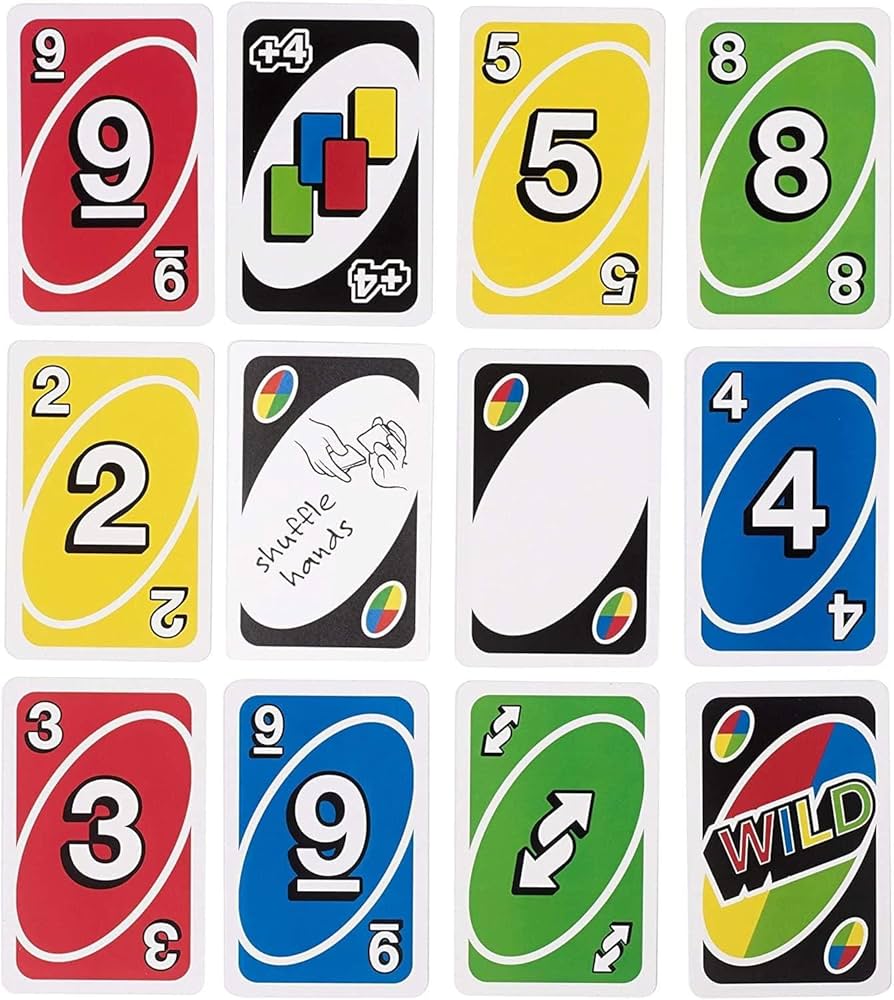
A standard UNO deck consists of 108 cards:
- Number cards (0-9) in four colors: Red, Blue, Green, and Yellow (76 cards total)
- Action cards: Skip, Reverse, and Draw Two in each color (24 cards total)
- Wild cards: Regular Wild and Wild Draw Four (8 cards total)
Starting the Game
Each player is dealt 7 cards. The remaining cards form a draw pile, placed face down in the center. The top card of the draw pile is flipped over to start the discard pile. If this card is an action or wild card, specific rules apply which we'll discuss later.
How to Play UNO
Basic Gameplay
Players take turns clockwise around the table. On your turn, you must match the top card of the discard pile by either:
- Color: Play a card of the same color
- Number: Play a card with the same number
- Symbol: Play an action card with the same symbol
If you cannot play a card, you must draw one card from the draw pile. If that card can be played, you may play it immediately. If not, your turn ends.
The UNO Call
This is perhaps the most famous rule: when you play your second-to-last card, you must say "UNO!" If you forget to say UNO and another player catches you before the next player begins their turn, you must draw two penalty cards.
Action Cards Explained
Skip Card
When you play a Skip card, the next player in sequence loses their turn. In a two-player game, this means you get to play again immediately.
Reverse Card
The Reverse card changes the direction of play. If the game was moving clockwise, it now moves counterclockwise, and vice versa. In a two-player game, this essentially acts as a Skip card.
Draw Two Card
When you play a Draw Two card, the next player must draw two cards from the draw pile and forfeit their turn. They cannot play a card on that turn, even if the drawn cards are playable.
Wild Card
A Wild card can be played on any color. When you play it, you declare which color the next player must match. You can play a Wild card even if you have other playable cards in your hand.
Wild Draw Four Card
This is the most powerful card in UNO. When played, you choose the color to continue play, and the next player must draw four cards and lose their turn. However, there's an important restriction: you can only legally play a Wild Draw Four if you have no cards matching the current color in play. If challenged and caught playing it illegally, you must draw four cards instead.
The Challenge Rule
If you suspect a player has illegally played a Wild Draw Four card (meaning they had a card of the current color they could have played), you can challenge them. The challenged player must show their hand to you:
- If they're guilty, they draw four cards instead
- If they played it legally, you draw six cards (the original four plus two penalty cards)
Winning the Game
The first player to get rid of all their cards wins the round. In casual play, this player is the winner. In tournament or scoring play, points are tallied:
- Number cards are worth their face value
- Action cards (Skip, Reverse, Draw Two) are worth 20 points each
- Wild and Wild Draw Four cards are worth 50 points each
The winner scores points based on the cards remaining in all opponents' hands. Games are typically played to 500 points.
Common Variations and House Rules
While official UNO rules are standardized, many players enjoy house rules that add variety:
Stacking Draw Cards
Some groups allow players to stack Draw Two and Draw Four cards. If someone plays a Draw Two on you, you can play your own Draw Two, passing the penalty to the next player who now draws four cards. Official rules don't support this, but it's a popular variation.
Jump-In Rule
In this variation, if you have the exact same card as the one just played (same color and number), you can play it out of turn, jumping ahead in the rotation.
Seven-O Rule
When a 7 is played, the player who played it swaps hands with another player of their choice. When a 0 is played, all players pass their hands in the direction of play.
Progressive UNO
Players can play multiple cards of the same number in a single turn if they have them, regardless of color.
Strategy Tips for Winning
Understanding the rules is just the beginning. Here are some strategic considerations:
Manage Your Wild Cards: Don't waste Wild cards early in the game. Save them for situations where you're stuck or for strategic color changes late in the game.
Pay Attention to Opponents: Track which colors your opponents are collecting and try to switch to colors they seem to lack.
Balance Your Hand: Try to maintain a variety of colors in your hand to avoid getting stuck.
Time Your Action Cards: Save powerful cards like Draw Two and Skip for crucial moments, especially when opponents are close to winning.
When you are ready for more tactics, continue with our advanced UNO strategies guide.
Playing UNO Online
The digital version of UNO maintains all the core rules while adding conveniences like automatic card dealing, rule enforcement, and the ability to play with people worldwide. Online platforms often include additional features like:
- Customizable rule sets
- Tournament modes
- Statistics tracking
- Different visual themes
When playing online, the game handles rule enforcement automatically, ensuring that challenges, draw penalties, and other mechanics are applied correctly.
Frequently Asked Questions
Can you end the game on an action card? Yes. You can win by playing any card as your last card, including Skip, Reverse, Draw Two, or Wild cards.
What happens if the draw pile runs out? Shuffle the discard pile (except the top card) to create a new draw pile.
Can you play a Wild Draw Four if you have a Wild card? Yes. The restriction only applies to cards matching the current color, not other Wild cards.
Do you have to play if you draw a playable card? According to official rules, if you draw a card that can be played, you may play it. However, many casual games require you to play it.
Conclusion
UNO's enduring popularity stems from its perfect balance of simplicity and strategy. The basic rules are easy enough for young children to learn, yet the game offers enough tactical depth to keep adults engaged. Whether you're playing with family at home or competing with strangers online, understanding these rules will ensure everyone has a fair and enjoyable experience.
Remember, while house rules can add fun variety to the game, it's important that all players agree on which rules are in effect before starting. This is especially crucial in online play, where players from different backgrounds may have learned different variations.
Now that you understand all the rules, you're ready to jump into a game and start building your UNO skills. The best way to master the game is through practice, so gather some friends or join an online match and put your knowledge to the test.