




1. 21 Cards Game Overview
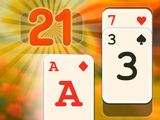
21 Cards is a column-building card puzzle inspired by blackjack totals but designed for solo planning. Three columns sit on the table, each with its current value displayed above it. Cards arrive one at a time, and the player chooses which column receives each draw. Reaching exactly 21 clears that column and awards points. Exceeding 21 creates a bust, while filling every available position without a legal placement ends the run.
Number cards use their printed values. Jacks, queens, and kings are worth 10, while aces can count as 1 or 11 depending on what keeps the column useful. Because the next card must be placed somewhere, each decision distributes risk across all three stacks. One column may be held near 21 for a likely small card, another may absorb a ten-value face card, and a third can remain flexible around an ace.
The game is easy to understand but becomes demanding as safe ranges shrink. Luck determines the draw order, yet planning determines whether that order can be absorbed. Consecutive exact totals increase the scoring opportunity, encouraging players to clear columns without destroying the balance of the others. 21 Cards is ideal for solitaire fans, blackjack players interested in a non-gambling puzzle, and anyone who likes quick number strategy. Every successful 21 provides an immediate reset and a new chance to extend the streak.
Key Details:
| Genre: | Card / Number Puzzle / Solitaire |
| Difficulty Level: | Easy to learn, Medium to master |
| Average Play Time: | 5–15 minutes |
| Best For: | Blackjack fans, solitaire players, and mental-math puzzle enthusiasts |
2. How to Play 21 Cards
Getting Started:
- Draw or reveal the next card from the deck.
- Review the current totals of all three columns.
- Place the card in the column where it best supports a total of 21.
- Clear a column by reaching exactly 21 without going over.
- Continue scoring until no column can safely accept the next card.
Basic Controls:
- Mouse: Click or drag the current card to one of the three columns.
- Touchscreen: Tap the chosen column or drag the card into it.
Objective: Create as many exact totals of 21 as possible, build scoring streaks, and avoid busting or filling all columns.
3. 21 Cards Features & Highlights
- ✓ Three simultaneous columns turn one-card draws into meaningful choices
- ✓ Exact-21 clears provide a clear and satisfying short-term goal
- ✓ Flexible ace values create useful rescue and planning opportunities
- ✓ Face-card values make blackjack knowledge immediately relevant
- ✓ Streak scoring rewards consistent column management
4. 21 Cards Tips & Strategies
Beginner Tips:
- Keep one column low enough to absorb an unexpected ten-value card.
- Avoid pushing all three totals into the same narrow range.
- Use an ace where its flexible value preserves the most options.
Advanced Strategies:
- Build complementary totals such as 11 and 10 across different columns.
- Clear a column before every other stack becomes too constrained.
- Track the rough balance of low cards and face cards already seen.
What to Watch Out For:
- A column close to 21 is not useful if only one rare value can complete it.
- Filling all three stacks with high totals leaves no buffer for the next draw.
5. 21 Cards Game Elements Explained
Column Totals and Card Values: Every placed card adds to one of three independent totals. Number cards contribute face value, and jacks, queens, and kings each add ten. Aces are flexible, counting as one or eleven according to the state supported by the game. The ideal column reaches exactly 21; a total above 21 is a bust. Since cards arrive sequentially, columns act as parallel storage for different risk profiles. Keep one flexible, one near completion, and one available for awkward high cards when possible. A total of 11 pairs naturally with any ten-value card, while totals such as 18 or 19 require scarce low draws and can become traps. Do not evaluate a column only by its current closeness to 21. Consider how many future card values complete it safely. A column at 15 accepts several low values without immediate disaster, while 20 accepts only an ace counted as one. Good distribution maximizes the number of next cards that have at least one legal and useful home.
Exact Clears, Streaks, and Run Survival: When a column reaches exactly 21, it clears and becomes available for new cards. This does more than add points: it restores capacity and creates a buffer for the next unpredictable draw. Consecutive successful combinations can increase the score or streak value described by the source, so efficient play tries to chain clears without leaving the other columns unstable. Sometimes placing a card into a lower-total column delays an immediate 21 but protects the whole run. Survival should take priority because more draws create more scoring opportunities. If two columns are close to busting, use the third to build a controlled clear, then rotate risk into the newly empty space. The run ends when columns are full and no card can be placed, or when the version applies its bust condition. Watch the interface's warnings and totals. Luck can create an impossible sequence, but most strong runs come from maintaining distinct total ranges, using aces carefully, and treating each cleared column as renewed strategic space.
6. 21 Cards Frequently Asked Questions
Q: How do I clear a column?
A: Place cards in it until the displayed total is exactly 21. The column then clears and awards points.
Q: What should I do if the next card would bust two columns?
A: Use the third column if possible, even when it does not create an immediate scoring setup. Preserving the run is the priority.
Q: Is 21 Cards compatible with mobile and desktop browsers?
A: Yes. The original page lists Web Browser support on PC and Android/iOS mobile devices.
Q: Can I save my progress?
A: Runs are short and the source does not document saving an unfinished game or cloud-synced scores.
Q: How do I unlock higher streak scores?
A: Complete exact-21 columns consecutively while keeping the run alive. The streak is earned through play rather than a separate unlock menu.