


1. Gomoku Two Players Game Overview
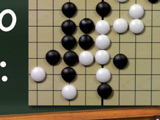
Gomoku Two Players adapts the classic five-in-a-row game to a 14x14 board. Black and white players alternate placing stones on empty line intersections. Black moves first, and the first side to create an unbroken straight line of five matching stones wins. Horizontal, vertical, and diagonal lines all count.
The game resembles tic-tac-toe in its turn structure, but the larger grid and five-stone target produce far deeper patterns. A single placement can extend one attack while blocking another, and intersecting lines can create two threats that cannot both be answered. Stones never move after placement, so the entire history of the round remains visible and every early decision shapes the final tactical region.
Players can challenge the computer or invite another person to use the same device. Solo mode includes computer difficulty choices and lets the player select a stone color, making it useful for studying both first-player initiative and second-player defense. Local two-player mode turns the board into a direct contest with a friend, parent, or sibling. Gomoku is especially appealing to strategy beginners because the win condition can be explained in one sentence, yet repeated games reveal rich ideas such as open threes, blocked fours, and forcing sequences. The browser version provides a clean way to practice without setting up a physical board.
Key Details:
| Genre: | Abstract Board / Five-in-a-Row Strategy |
| Difficulty Level: | Easy to learn, Hard to master |
| Average Play Time: | 5–20 minutes |
| Best For: | Chess and tic-tac-toe fans, families, and abstract-strategy learners |
2. How to Play Gomoku Two Players
Getting Started:
- Choose computer or local two-player mode.
- Select color and AI difficulty when playing solo.
- Place one stone on any empty line intersection; Black moves first.
- Alternate turns while extending your lines and blocking the opponent.
- Form five consecutive stones horizontally, vertically, or diagonally.
Basic Controls:
- Mouse: Click an empty board intersection.
- Touchscreen: Tap the intended intersection.
Objective: Create an uninterrupted line of five stones before the opponent does.
3. Gomoku Two Players Features & Highlights
- ✓ A 14x14 grid provides room for varied opening patterns
- ✓ Computer difficulty and color choices support structured solo practice
- ✓ Local two-player mode works for repeated shared-device matches
- ✓ Permanent stone placement makes tactics visible and easy to review
- ✓ Simple rules lead naturally to advanced threat combinations
4. Gomoku Two Players Tips & Strategies
Beginner Tips:
- Build near the center so each stone can extend in more directions.
- Block an opponent's open four immediately.
- Look at both ends of every three-stone line before choosing a move.
Advanced Strategies:
- Create intersections where one move threatens two different lines.
- Prefer open threes with both ends available over long lines blocked at one end.
- Use forcing moves to keep initiative and restrict the opponent to defense.
What to Watch Out For:
- Extending your own line is unsafe when the opponent already has an immediate win.
- A diagonal threat is easier to overlook than a horizontal or vertical one.
5. Gomoku Two Players Game Elements Explained
Lines, Open Ends, and Threat Strength: A chain's value depends on length and available endpoints. Two stones create potential. Three consecutive stones with both ends open can become a serious threat because several future moves may lead toward five. Four stones with one open end demand an immediate block; four with two open ends usually represent an unavoidable win if the rules allow the pattern. A line blocked by an opponent at both ends cannot grow and becomes strategically inactive. Count spaces as carefully as stones. A scattered pattern with one-cell gaps may create multiple completion points, while a visible straight chain can be easy to stop. Because stones are placed on intersections, diagonals run through the same strategic network as rows and columns. Scan all four line directions after every move. When attacking, choose positions that keep two endpoints or create crossing possibilities. When defending, block the square that removes the greatest number of future continuations rather than simply touching the opponent's newest stone.
Initiative, Double Threats, and Board Control: Initiative belongs to the player making threats that require a response. If every move forces the opponent to block, the attacker controls where the game develops. The strongest tactic is a double threat: one placement creates two separate winning continuations, leaving only one defensive move. These often occur where a horizontal or vertical pattern crosses a diagonal one. Building them requires board control around the center and enough open space at both ends. Black's first move provides initial initiative, while White must balance defense with creating counterplay. Against the computer, changing difficulty reveals how quickly the AI recognizes these sequences. Do not spread stones without relationships; connected patterns exert more pressure and support more intersections. At the same time, avoid concentrating so tightly that one defensive stone blocks several plans. Review the board globally before each move. A distant open three may be more urgent than the local cluster. Victory comes from sequencing threats so the opponent's required defense helps your next pattern.
6. Gomoku Two Players Frequently Asked Questions
Q: How do I place a stone?
A: Click or tap an empty line intersection. The stone remains there for the rest of the round.
Q: What should I do if the opponent has four in a row?
A: Block the open endpoint immediately. If both endpoints are open, the position may already be unwinnable.
Q: Is Gomoku Two Players compatible with mobile and desktop browsers?
A: Yes. The original page lists browser support for PC and Android/iOS mobile devices.
Q: Can I save my progress?
A: Rounds are short and the source does not document saving an unfinished board.
Q: How do I unlock harder AI?
A: Choose the available computer strength before a solo game. Difficulty is presented as a setup option rather than a progression reward.