

1. Domino Adventure Game Overview
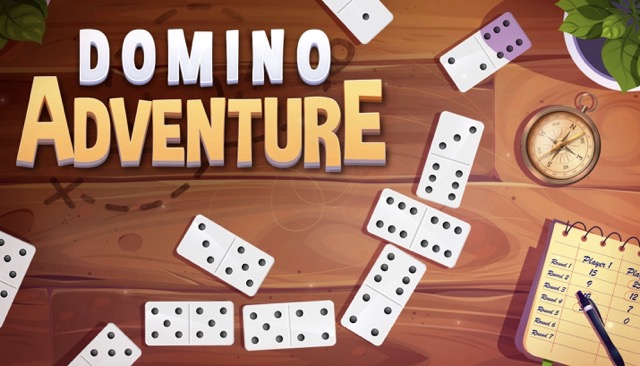
Domino Adventure is a fresh, customizable take on the classic dominoes game — one that respects the beloved tile-matching tradition while adding enough variety and collectible content to keep even experienced players engaged long past a standard domino session. Whether you're new to dominoes or a seasoned player looking for a digital version with personality, Domino Adventure meets you where you are.
The game offers two distinct play modes — Block and Draw — providing meaningfully different strategic experiences within the same familiar tile-matching framework. Three match durations let you control how long each session runs, making it equally suitable for a quick five-minute game or a longer, more deliberate strategic match. And a collectible domino set system rewards ongoing play with exclusive tile designs that customize your visual experience at the table.
At its core, dominoes is a game of elegant simplicity: match tiles by connecting identical numbers, build your chains thoughtfully, and outlast your opponent. Domino Adventure preserves that elegance while layering in enough customization and reward structure to make each session feel like part of something larger.
The drag-and-drop tile controls feel natural and intuitive whether you're using a mouse or touchscreen, keeping the focus where it belongs: on the satisfying click of a perfectly matched domino tile finding its place in the chain. If you've ever enjoyed a relaxed game of dominoes at a kitchen table, Domino Adventure captures that exact feeling in a clean, accessible digital format.
Key Details:
| Genre: | Tile Game / Strategy / Casual |
| Difficulty Level: | Easy to Medium |
| Average Play Time: | 5–20 minutes per match (depending on chosen duration) |
| Best For: | Domino fans of all experience levels; casual strategy players who enjoy tile-matching games with reward progression |
2. How to Play Domino Adventure
Getting Started:
- Choose your preferred game mode — Block (no drawing from the boneyard) or Draw (draw tiles when no valid play exists).
- Select your match duration from the three available options.
- Tiles are distributed to both players from the shuffled set.
- Take turns placing tiles on the chain by matching one of the open ends with a tile of the same number.
- When you've played all your tiles (or the game reaches a blocked state), scoring determines the winner.
Basic Controls:
- Drag & Drop: Click and hold a domino tile, drag it to the valid connection point on the chain, and release to place it.
- Click to Select: Click a tile to select it, then click a valid chain end to place it.
- Menu Navigation: Click to interact with mode selection, match duration options, and the collectible sets menu.
Objective: Be the first player to play all tiles in your hand, or — if the game blocks — hold the fewest total pip points when play stops. Strategic tile placement maximizes your scoring advantage while minimizing the value of tiles you might be left holding.
3. Domino Adventure Features & Highlights
- ✓ Two game modes — Block and Draw provide meaningfully different strategic experiences within the classic domino framework
- ✓ Three match durations — flexible session length suits quick casual play and longer strategic matches equally
- ✓ Collectible domino sets — unlock exclusive tile designs through play for a personalized table aesthetic
- ✓ Intuitive drag-and-drop controls — natural tile placement that feels satisfying on both mouse and touch input
- ✓ Accessible for all skill levels — simple rules welcome newcomers; strategic depth rewards experienced players
4. Domino Adventure Tips & Strategies
Beginner Tips:
- Play your heaviest tiles early. High-pip tiles (like the double-six) are worth more points if you're stuck holding them at the end. Get them onto the chain as soon as you have a valid placement opportunity.
- Keep the chain open for yourself. Before placing a tile, check both ends of the chain after your play — make sure you're not creating a chain end number that you have no tiles to match later.
- Doubles are powerful — and risky. Double tiles (same number on both ends) can only be played on one specific number, making them more situational. Place them when the chain end matches, but don't hold out too long for the "perfect" moment.
Advanced Strategies:
- Control the chain ends deliberately. Experienced players try to manipulate the chain so that the open ends show numbers they have multiple tiles for — and numbers their opponent is likely short on. This is the deepest strategic layer in competitive dominoes.
- Count the tiles. Track which numbers have been played on the chain. If a specific number appears frequently on the chain, the available tiles for that number are running low — giving you information about what your opponent is likely holding.
- In Draw mode, use the boneyard strategically. Drawing when you have a valid play is usually suboptimal, but sometimes drawing is correct — if your playable tile would give your opponent an obvious advantage, drawing might produce a better tile without sacrificing too much.
What to Watch Out For:
- Creating a closed chain you can't play on. If both ends of the domino chain show numbers you have no matching tiles for — and you're in Block mode — you're forced to pass. Avoid painting yourself into this corner by maintaining awareness of your hand relative to the chain's current open ends.
- Holding high-pip tiles in late game. If the game approaches a blocked state, heavy tiles in your hand become liabilities. As the boneyard depletes, actively try to place high-value tiles even if lower-value plays are available.
5. Domino Adventure Game Elements Explained
The Block and Draw Modes: Domino Adventure's two game modes create meaningfully different strategic environments. In Block mode, there is no boneyard draw — when a player has no valid tile to play, they pass, and the game continues until one player empties their hand or both players are blocked. Block mode rewards tight hand management and forward planning since you can never supplement your hand with new tiles. In Draw mode, players who have no valid play draw tiles from the boneyard (the remaining undealt tiles) until they find a playable tile. Draw mode creates more fluid, extended games where the boneyard provides a strategic reserve — but it also means opponents may be drawing useful tiles when you'd rather they were stuck. Both modes use the same core matching rules; the boneyard availability is the single rule that creates such different strategic landscapes.
The Tile Matching System: Domino tiles are divided into two halves, each showing a number of pips (dots) from zero to six. To place a tile on the chain, one of its halves must match the number showing at an open end of the existing chain. A 3-5 tile, for example, can be placed on either a 3 end or a 5 end of the chain. When a tile is placed, the chain extends and its new open end shows the tile's other number. Double tiles (where both halves show the same number, like the 4-4) are placed perpendicular to the chain and extend from just one number. Managing your hand to ensure you always have tiles that can connect to the chain's current open ends is the central tactical challenge of dominoes — and Domino Adventure's clear visual presentation of the chain ends makes this tracking more accessible than ever.
The Collectible Sets System: Beyond the core gameplay, Domino Adventure features a collectible domino set system that unlocks alternative tile designs as you progress and play. These collectible sets change the visual appearance of your tiles — the pip styles, tile colors, and overall aesthetic — without affecting any gameplay mechanics. Unlocking new sets provides an ongoing reward loop that gives players a reason to keep playing beyond any single match, and the variety of designs lets you personalize your table experience to your taste. Collecting exclusive sets also provides bonuses and rewards that accumulate through play, giving the system a progression dimension alongside its cosmetic appeal.
6. Domino Adventure Frequently Asked Questions
Q: How do I place a domino tile on the chain?
A: Drag a tile from your hand and drop it onto a valid open end of the chain — the end that shows a matching number. Release to confirm the placement. If you prefer clicking, select the tile first and then click the valid chain end.
Q: What's the difference between Block and Draw mode?
A: In Block mode, players must pass if they have no valid tile to play — there's no drawing from a reserve. In Draw mode, players with no valid play draw tiles from the boneyard until they find one. Block mode is tighter and more strategic; Draw mode is more fluid and extended.
Q: How does scoring work at the end of a game?
A: The player who empties their hand first wins and scores the total pip value of all tiles remaining in their opponent's hand. In a blocked game (both players pass), the player with fewer total pips in their hand wins and scores the difference between the two hands' pip totals.
Q: How do I unlock collectible domino sets?
A: Sets are unlocked through continued play and by completing specific game milestones or challenges. Check the collectible sets menu to see which sets are available and what's needed to unlock each one.
Q: Is Domino Adventure playable on mobile?
A: Yes — the drag-and-drop tile controls translate naturally to touchscreen input, and the game runs in mobile browsers without requiring a download.