

1. Golf Solitaire Pro Game Overview
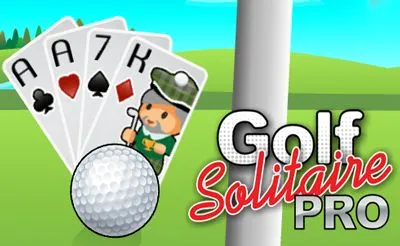
Golf Solitaire Pro takes the clean, addictive sequence-building formula of Golf Solitaire and sharpens it into a faster, more pressurized experience with one critical new constraint: clear the course before the deck runs out. That finite deck is the ticking clock that transforms a relaxed card game into a genuine strategic sprint.
The rules are immediately accessible — build ascending or descending sequences of any suit on the foundation pile by picking tableau cards one rank above or below the current top. The bi-directional freedom means sequences can flow up and down freely, following the course layout wherever the cards allow. What makes Golf Solitaire Pro distinctive is the wild card. W cards can be played on anything, breaking any sequence dead end and accessing any covered card you urgently need. These are precious resources — saving them for the right moment is one of the game's most important skill decisions.
The balance between luck and skill is what keeps Golf Solitaire Pro endlessly replayable. The draw pile keeps every run unpredictable — you never know exactly what card is coming next from the deck. But the sequencing decisions, the wild card management, and the strategic prioritization of uncovering covered cards are entirely in your hands. Good play consistently outperforms poor play over many sessions, even with identical starting layouts.
The stress-free tone — the game describes itself as the "ultimate stress-free game" — is earned through its accessible mechanics and the absence of a time pressure that feels punishing. The deck limit is a challenge, not a punishment, and the satisfaction of clearing a course cleanly is a repeatable reward that brings players back hole after hole.
Key Details:
| Genre: | Card Game / Solitaire |
| Difficulty Level: | Easy to Medium |
| Average Play Time: | 5–15 minutes per hole |
| Best For: | Casual card game players who enjoy sequence-building solitaire with a strategic twist and satisfying combo-chaining mechanics |
2. How to Play Golf Solitaire Pro
Getting Started:
- Cards are laid out across the course (tableau) in a hole-specific arrangement.
- A starting card in the foundation pile serves as your initial base.
- Click any accessible tableau card one rank higher or lower than the current foundation top.
- That card becomes the new foundation top — extend the sequence as far as possible.
- When no valid move exists, draw from the deck. If the deck runs out before the course is cleared, the hole is lost.
Basic Controls:
- Click / Tap Tableau Card: Select a valid card to add it to the foundation sequence.
- Click / Tap Deck: Draw the next card when no tableau card is accessible.
- Wild Card (W): Play on any card regardless of rank — use to break dead ends or access critical covered cards.
Objective: Clear all cards from every hole's tableau before the deck is exhausted. Build the longest possible ascending/descending sequences without drawing from the deck. Save wild cards for the moments they're truly needed.
3. Golf Solitaire Pro Features & Highlights
- ✓ Deck-limit pressure — a finite draw pile creates the strategic urgency that makes every sequence decision matter
- ✓ Wild cards (W) — powerful wildcards that can break any sequence dead end, requiring careful timing to use optimally
- ✓ Bi-directional sequence building — chains ascend and descend freely, following the natural flow of available cards
- ✓ Course-based hole progression — each level is a distinct hole with a unique card layout and difficulty
- ✓ Skill-and-chance balance — draw pile randomness and player sequencing decisions create a consistently fresh challenge
4. Golf Solitaire Pro Tips & Strategies
Beginner Tips:
- Always try to uncover covered cards. Cards buried beneath others can't be used until exposed. Every sequence move that reveals a new card expands your options for extending the chain — prioritize these over moves that clear only already-exposed cards.
- Think two ranks ahead, not just one. Before clicking a card to add to the sequence, consider what it opens up next. A card that continues the chain for three more moves is worth more than a card that continues it for one.
- Don't play wild cards until you're genuinely stuck. The W card is your emergency exit — it can be played on anything. Using it on a situation you could have resolved with a tableau card wastes the wild card's value on a non-emergency.
Advanced Strategies:
- Plan the full sequence before clicking. Scan the entire course layout at the start of each hole. Trace the longest sequence chain you can identify — which card to start from, which direction to take it, which pivot values to route through — before making your first click.
- Start with the sequence that uncovers the most new cards. Multiple sequence starting points may be available. Choose the one that, as cards are cleared, reveals the most previously covered cards — this cascading reveal effect extends your total chain significantly.
- Use wild cards to bridge disconnected sequence sections. The most powerful wild card plays connect two large chain sections that have a single-rank gap between them. A W card played at the junction of two long sequence runs saves far more draws than a W card used to continue a short chain.
What to Watch Out For:
- Dead-end sequences that strand accessible cards. Some sequence paths clear a section of the course but leave isolated high or low cards (Kings, Aces) that can't connect to anything else without a specific intermediate rank that's been buried. Avoid routes that strand extreme-rank cards with no viable neighbors.
- Over-relying on the deck too early. If you're drawing frequently in the first half of a hole, the deck will run out before the course is fully cleared. Force yourself to exhaust more tableau options before each draw — even a chain of two is better than drawing unnecessarily.
5. Golf Solitaire Pro Game Elements Explained
The Deck-Limit Pressure System: Golf Solitaire Pro's most defining mechanic is the finite deck. Unlike Golf Solitaire's more relaxed approach, here the deck has a fixed number of cards — once they're gone, no more foundation resets are available. If tableau cards remain when the deck empties, the hole is lost. This constraint transforms the stockpile draw from a neutral action into a resource expenditure with a real cost. Every draw spent on a dead end is a draw unavailable for a future genuine dead end. The best players maintain a consistent mental ratio: how much course is cleared versus how many deck cards remain? If deck depletion is outpacing course clearance, longer chain identification and wild card management become critical immediately rather than later.
The Wild Card System: W cards (wild cards) are Golf Solitaire Pro's most powerful tool and its most interesting strategic decision. A wild card can be added to the foundation pile on any turn regardless of the current top card's rank — it effectively accepts any next card and can be used to skip past a rank gap that would otherwise require a deck draw. Wild cards have three primary uses: breaking a sequence dead end when no tableau card matches and a draw would be wasteful, accessing a specific covered card by clearing a path that requires skipping a rank, and bridging two large separate sequence sections that have a single disconnected rank between them. The third use typically produces the highest value per wild card played, since it connects long chains that collectively save many deck draws.
The Sequence-Building System: Golf Solitaire Pro's foundation sequences build freely in either direction — ascending or descending by one rank at each step, with suit entirely irrelevant. A foundation showing a 7 accepts any 6 or any 8; a foundation showing a Jack accepts any 10 or any Queen. This bi-directional freedom means chains can flow naturally up and down through the course's card distribution, zigzagging through whatever ranks are accessible. Long chains in Golf Solitaire Pro often look like value waves — ascending through a cluster of mid-range cards, peaking, reversing and descending through another cluster, reaching a low point, reversing again upward. Reading these wave patterns in the tableau layout before starting — identifying the course's natural card distribution topology — is what separates players who consistently clear courses from those who run out of deck on every attempt.
6. Golf Solitaire Pro Frequently Asked Questions
Q: What happens when the deck runs out?
A: If the deck is exhausted and tableau cards remain, the hole cannot be completed. Restart the hole and focus on building longer unbroken sequences — using fewer deck draws per card cleared is the path to finishing before the deck runs out.
Q: When is the best time to use a wild card?
A: Save wild cards for situations where using one saves multiple deck draws — specifically when they bridge two large separate chain sections or access a key covered card that would otherwise require drawing several times to reach. Using wild cards on single-card dead ends that a draw could also resolve wastes their potential.
Q: Does suit matter when building sequences?
A: No — suit is completely irrelevant in Golf Solitaire Pro. Only the rank matters: each card added to the foundation must be exactly one rank higher or lower than the current top card, regardless of suit.
Q: Can sequences wrap around from King to Ace?
A: This depends on your version's rules. Some Golf Solitaire Pro implementations allow Ace-King wrapping, treating Ace as adjacent to both 2 and King for sequencing purposes. Check your version's rules or test it during play.
Q: How do I know which tableau cards are accessible?
A: Accessible (uncovered) cards are those with no other card sitting on top of them. In Golf Solitaire Pro, the course layout typically shows uncovered cards fully visible — covered cards appear partially obscured or highlighted differently. Clearing uncovered cards reveals the covered cards beneath them.